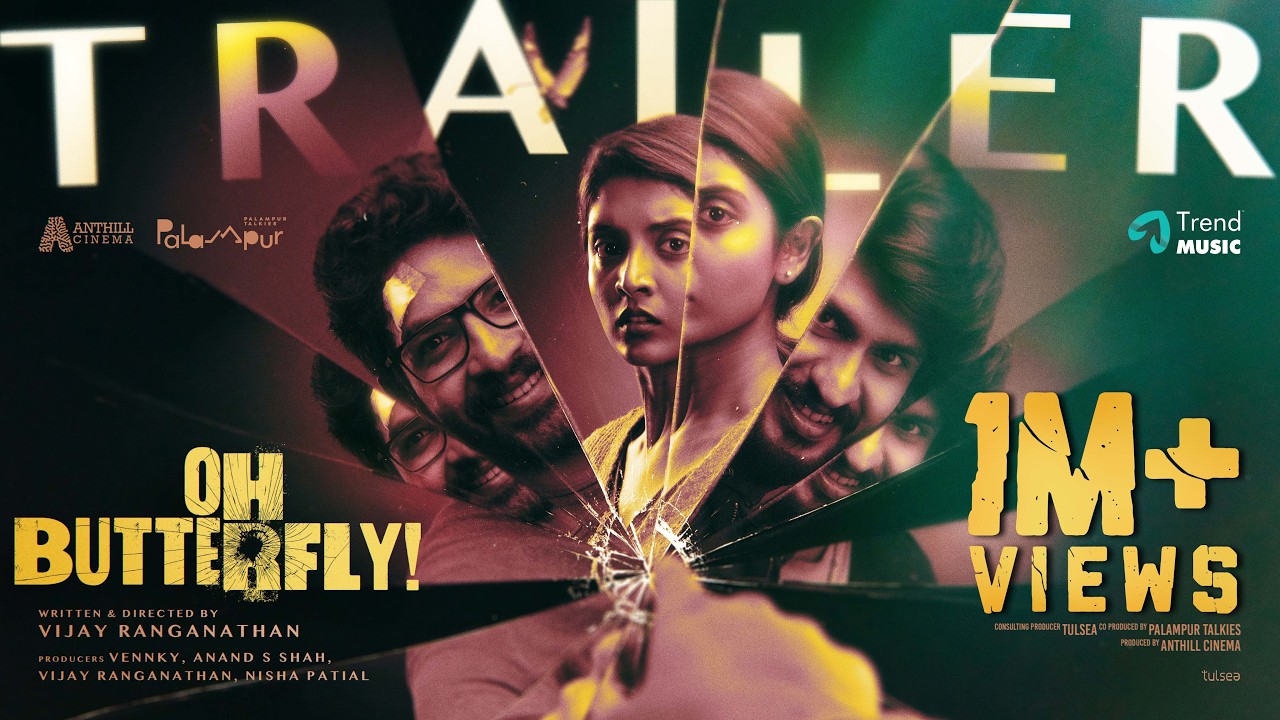
Oh Butterfly Movie 2026 Filmyzilla Review Details
Oh Butterfly (2026) Review – A Chilling Hill-House Thriller That Lives in the Shadows

Let me tell you, the theatre was pin-drop silent. Not the boring kind of silent. The kind where you can hear the collective breath of the audience hitch when a floorboard creaks on screen.
🎬 Book Movie Tickets Online
Check showtimes, seat availability, and exclusive offers for the latest movies near you.

That’s the power of a well-crafted atmospheric thriller, and Oh Butterfly uses every tool in the cinematic shed to pull you into its unsettling world.
This isn’t your typical jump-scare Tamil thriller. Debutant director Vijay Ranganathan delivers a psychological mystery draped in a haunting, almost poetic, visual language.
It’s a film about trauma, secrets, and the fragile mind, using the metaphor of a butterfly not for beauty, but for the hidden shadows it carries. The scale is intimate, the intent is deeply unsettling, and the execution is remarkably assured for a first-timer.
| Role | Name |
|---|---|
| Director & Writer | Vijay Ranganathan |
| Cinematographer | Vedaraman Sankaran |
| Music & BGM | Vaisakh Somanath |
| Sound Designer | TS Hariharasudhan |
| VFX Supervisor | Aswin Manikandan |
| Production Designer | Saranya Ravichandran |
| Colorist | Rajarajan |
| Lead Cast | Nivedhithaa Sathish, Ciby Bhuvana Chandran |
| Pivotal Support | Nassar, Lakshmipriyaa Chandramouli |
Visual Grandeur: The House is a Character
Forget sprawling CGI cities. The visual spectacle here is one of oppressive atmosphere. Cinematographer Vedaraman Sankaran and Production Designer Saranya Ravichandran build a world that feels real, lived-in, and deeply wrong.
The hill-house is the star—its dark wood, cramped corridors, and large windows framing the misty, threatening hills outside.

The VFX, supervised by Aswin Manikandan, is seamless and entirely in service of the mood. It’s the subtle stuff: enhancing the density of the fog, making the forest at night feel impenetrably dark, and most crucially, the treatment of the butterflies.
They aren’t colourful Disney creations. Their movements are erratic, their presence feels like a visual whisper of unease, a perfect extension of the film’s core metaphor.
Sound Design & BGM: The Sound of a Breaking Mind
If the visuals pull you in, the sound design pins you to your seat. TS Hariharasudhan’s work is a masterclass in psychological audio. The mix in the theatre is immersive to the point of being claustrophobic.
Every creek of the house isn’t just heard; you feel the strain of the wood. The rustle of leaves outside the window could be the wind, or something else.
Vaisakh Somanath’s background score is the film’s nervous system. It avoids loud stings, opting instead for a low, droning ambient tension that gets under your skin.
The occasional use of a solitary, melancholic violin to represent Gouri’s (Nivedhithaa) psyche is brilliant. It’s not seat-shaking bass, but a seat-gripping, pervasive dread that the theatre’s Atmos system delivers flawlessly.

Cinematography: Framing the Fragile Psyche
Sankaran’s camera work is deliberate and patient. He uses a lot of static, composed frames, making you study the scene, look for the hidden detail, the shadow that doesn’t belong.
The camera often stays tight on Nivedhithaa’s face, trapping you in her escalating anxiety. When it does move, it’s often a slow, unsettling push-in or a smooth, voyeuristic glide through the house’s corridors.
The colour grading by Rajarajan is a character itself. The palette is desaturated, leaning into cold blues and greys in the present, with warmer, hazy tones used for traumatic flashbacks.
The contrast between the clinical light inside the house and the organic, consuming darkness outside is visually striking and thematically potent.
| Aspect | Rating / Comment |
|---|---|
| Visual Atmosphere | 9/10 – Masterful, oppressive, and beautiful in its gloom. |
| Sound Design Immersion | 9/10 A clinic in building tension through audio. |
| BGM & Score | 8.5/10 Perfectly understated and haunting. |
| Cinematography | 8.5/10 Composed, patient, and psychologically acute. |
| VFX Integration | 8/10 Invisible and effective, serves the story. |
| Production Design | 9/10 The house is an unforgettable set. |
| Overall Technical Package | 8.5/10 A cohesive, high-quality arthouse thriller tech. |
Visual & Audio Highlights: Scenes That Linger
- The Opening Drive: The car winding up the misty hill road, the sound of the engine muffled by the fog, the first ominous glimpse of the house. It sets the tone perfectly.
- Butterfly in the Glass: Nassar’s lepidopterist calmly explaining a specimen, the clinical focus on the pinned butterfly juxtaposed with Gouri’s growing horror. Chilling.
- The Night Corridor Walk: A single, long take following a character with just a candle. The play of light and shadow, and the creaking floorboard sounds, is pure atmospheric genius.
- The Flashback in Golden Haze: The sudden shift to a warm, over-exposed colour grade for a traumatic memory. The visual distortion mirrors the mental one.
- The Window Reflection: A character sees something move outside, but the reflection in the dark window pane shows something else entirely. A simple, brilliant visual trick.
- The Climactic Silence: After a crescendo, the sound drops out completely for a key revelation. The theatre’s silence became a physical weight.
Theatrical vs OTT: A Clear Mandate
This is a non-negotiable theatre watch, especially in a good audiovisual environment. The film’s power is 80% in its crafted atmosphere—the immersive soundscape that makes you jump at a whisper, the detailed production design you need a big screen to appreciate, and the collective tension of an audience.
On a TV or phone, you’ll get the story, but you’ll miss the experience. The chilling ambience will be flattened, the subtle audio cues lost.

| Format | Verdict |
|---|---|
| IMAX / Premium Large Format | Highly Recommended. The visual immersion is worth it. |
| Standard Theatre (Good Sound) | Mandatory. This is the intended way to watch. |
| OTT / Home Streaming | Not Recommended First Watch. You’ll lose the essence. |
Who Will Enjoy This?
This is not a “mass” film. It’s a slow-burn, cerebral thriller for the “class” audience and fans of psychological horror. If you loved the atmospheric dread of films like Pisasu or the psychological unraveling in certain Mysskin scenes, this is for you.
If you need fast-paced action, punch dialogues, and clear-cut heroes, you will find this tedious. It rewards patience and attention to detail.
Final Visual Verdict
Oh Butterfly is a stunning debut and a technical triumph in atmospheric storytelling. It justifies every rupee of a big-screen ticket for its masterful control of mood, sound, and shadow.
This is how you make a thriller that gets under the skin, not just in front of the eyes. A haunting, beautiful, and deeply effective piece of cinema.
Ratings are purely my take after multiple watches — your experience might differ!
FAQs: Technical & Format
- Is the VFX heavy? No. The VFX is minimal and environmental. It’s used to enhance atmosphere (fog, darkness) and for subtle butterfly motifs, not for large-scale spectacle.
- How important is sound quality? Paramount. The sound design is the primary engine of suspense. A theatre with a good Atmos or surround system is crucial to feel the full impact.
- Is it very scary with jump scares? It’s deeply unsettling and tense, but not reliant on loud, sudden jump scares. The horror is psychological and atmospheric, built through a creeping sense of dread.